
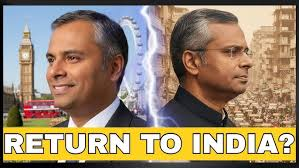
For decades, the conversation about global talent has focused on one direction: leaving India for opportunities abroad. But something interesting is happening now. The arrows on the map are starting to point both ways. India is not just a country that sends its brightest minds to the world; it is increasingly becoming a place where the world’s brightest minds want to come and stay.
If you are a scholar or researcher looking at the global landscape, you might have noticed the doors in traditional destinations like the United States and the United Kingdom creaking a bit. Visa backlogs, political uncertainty, and rising costs have made the old dreams feel a little further away. At the same time, India has been quietly building something worth paying attention to. With its ambitious educational reforms, a growing appetite for research funding, and a demographic profile that leans young and hungry for knowledge, India is positioning itself as a serious destination for academic talent.
But how do you actually make it work? How do you go from arriving on a student visa to building a long-term, stable life in India? The answer lies in understanding the system, knowing which doors are open, and aligning your skills with what the country actually needs.
Starting Right: The Student Visa Foundation
The journey to long-term residency almost always begins with the right entry point. For scholars, that is typically the Student Visa, specifically the S-5 sub-category. This visa is designed for research scholars, visiting faculty, and those coming to India on bilateral exchange programs or as part of scientific expeditions . It is not the same as the standard visa for an undergraduate degree. It acknowledges that you are coming to contribute to India’s intellectual life, not just to sit in a classroom.
When you apply for this visa, you will need an acceptance letter from a recognized Indian institution, proof of funding to support your stay, and a clear statement that you will not take up employment during your studies . The visa is typically granted for the duration of your course or up to five years, and it allows multiple entries -6. Once you arrive, if your stay exceeds 180 days, you must register with the Foreigners Regional Registration Office (FRRO) within fourteen days. This is not a suggestion; it is the law, and skipping it creates problems down the road.
The Game Changer: The G20 Talent Visa
Just when you thought the path was straightforward, the Indian government introduced something that has genuinely shifted the landscape. In late 2024, the Ministry of Home Affairs approved the G20 Talent Visa, a new category aimed directly at people like you .
This visa was first proposed by Prime Minister Narendra Modi at the G20 Summit in Brazil, and it is designed to do one thing well: attract top-tier academics, scientists, and researchers from G20 countries to India -2. It falls under the S-5 sub-category of the student visa framework, but it is specifically for those engaged in post-doctoral research, academic projects, fellowships, and specialized training programs -5-8.
Think of it as India’s answer to the UK’s Global Talent Visa or the American O-1 visa for extraordinary ability . It is a signal that India is no longer content to be a bystander in the global race for talent. It wants to compete. For a scholar, this visa offers a streamlined pathway to work with Indian institutions on cutting-edge research, particularly in science, technology, engineering, and academia -8. The University Grants Commission has been actively promoting this visa to universities across the country, encouraging them to bring international scholars into their labs and lecture halls -5.
Making the Leap: From Scholar to Professional
Here is where the path gets interesting. Your student visa or G20 Talent Visa gets you in the door, but long-term residency requires a shift. At some point, you will likely need to transition to an Employment Visa. This is the visa that allows you to work full-time, earn a salary, and build a career in India.
The Employment Visa is granted to skilled and qualified professionals who are being hired by an Indian company, organization, or research institution at a senior level, as a technical expert, or in a managerial position -4. There is a financial threshold to meet. Generally, your salary should exceed sixteen and a quarter lakh rupees per annum -4. This requirement ensures that the visa is used for genuine high-skilled positions rather than entry-level roles.
Your employer plays a crucial role here. They need to provide an employment contract, proof of their company’s registration, and an undertaking taking responsibility for your conduct -4. The visa is typically granted for one year or the period of your contract, and it can be extended while you are in India . Like the student visa, if you stay for more than 180 days, FRRO registration is mandatory -4.
The Skills That Open Doors
Not all scholars are equally likely to find sponsorship. India is looking for specific expertise. The government has made it clear that it wants to bolster its capabilities in science and technology. Fields like artificial intelligence, machine learning, renewable energy, biotechnology, and pharmaceuticals are particularly hot -8. If your research sits at the intersection of these areas, you are in a strong position.
There is also growing interest in translational research, work that can move from the lab to the market. Policy discussions around creating Special Science Zones have emphasized the need for research that leads to commercial products and services -1. If your work has clear applications in industry, you become not just an academic but an asset to the economy.
Beyond the hard sciences, there is demand for expertise in economics, public policy, and development studies. As India navigates its role as a major global power, institutions are hungry for scholars who understand the complexities of governance, international relations, and sustainable development.
The Long Game: Citizenship and Permanent Residency
Here is the honest truth about long-term residency in India: it is not like Canada or Australia. There is no straightforward points system that grants you permanent residency after a certain number of years. The concept of “permanent immigration” in the Western sense does not really exist in India -7. Instead, the path is built on renewals and, eventually, naturalization.
For most foreign scholars, long-term stay means continuously renewing your Employment Visa as long as you remain employed. These renewals are generally handled online through the e-FRRO portal, and you should start the process about sixty days before your current visa expires . Keep your records clean, maintain continuous employment, and stay compliant with registration requirements. This consistency builds a foundation.
If your goal is true permanency, the only real route is citizenship by naturalization. Under the Citizenship Act, 1955, a foreign national can apply for citizenship if they have resided in India for at least twelve years immediately preceding the application -7. You also need to be of good character and have adequate knowledge of an Indian language. There is a catch, though. India does not allow dual citizenship. If you naturalize, you must renounce your previous citizenship -7. This is a serious decision, not one to be taken lightly.
For those with Indian ancestry, there is the Overseas Citizen of India (OCI) card, which offers a middle path. It provides a lifetime multiple-entry visa, exemption from FRRO registration, and parity with Indian nationals in most economic and educational fields -7. However, OCI holders cannot vote, hold constitutional offices, or buy agricultural land. It is permanent residency in a practical sense, but not full citizenship.
There is also the Permanent Residency Status (PRS) scheme, but this is really aimed at investors, not salaried academics. To qualify, you would need to invest a minimum of ten crore rupees in an Indian business and generate employment for at least twenty Indian residents -7. For most scholars, this is not a realistic path.
What About Family?
If you are married or have children, you will want to know that they can come with you. Dependents of Employment Visa holders are eligible for dependent visas, typically categorized as E-1X, E-2X, or E-3X depending on the specific nature of your work . These visas allow your family to live with you for the duration of your stay. However, your spouse cannot automatically work in India. They would need to apply for their own work authorization or find an employer willing to sponsor them separately -10.
Staying on the Right Side of the Rules
Living in India on a long-term basis requires attention to detail. The e-FRRO portal is your best friend. It handles registrations, visa extensions, and address changes. Keep your information up to date. If you move to a new city or change your residential address, update it in the system promptly -10.
Health insurance is mandatory for all long-term foreign residents -10. Make sure you have adequate coverage. Also, be mindful of the 180-day registration rule. Whether you are on a Student Visa, G20 Talent Visa, or Employment Visa, if you are staying for more than six months, you must register. Failing to do so can lead to fines, legal trouble, and complications when you try to extend your visa .
A Changing Landscape
India’s approach to foreign scholars is evolving. The introduction of the G20 Talent Visa is a clear sign that the government understands the value of international talent. There is a growing recognition that to become a true knowledge economy, India needs to attract the best minds, not just grow its own. Policy experts have even proposed creating Special Science Zones with streamlined immigration rules and tax incentives for top researchers -1. While these are still proposals, they indicate the direction of travel.
For the scholar willing to navigate the system, the rewards are real. You get to be part of a country that is changing rapidly, where your work can have tangible impact. You get access to a rich cultural and intellectual heritage, a low cost of living compared to Western capitals, and a front-row seat to one of the most interesting economic experiments of the twenty-first century.
The path to long-term residency in India is not the easiest one. It requires patience, organization, and a willingness to work within a system that values compliance and continuity. But for those who make it, India offers something rare: the chance to build a life and a career in a place that feels like it is still becoming, still growing, still open to possibility.
Conclusion
In the end, choosing India as the place to build your academic career is a decision that requires both vision and patience. The path to long-term residency is not a straight line, and it does not offer the simple points-based permanency that some other countries advertise. Instead, it asks you to prove yourself over time, through continuous employment, compliance with regulations, and a genuine commitment to contributing to the intellectual life of the nation.
Yet for those who make the journey, the rewards are substantial. You gain access to a country that is actively investing in research and higher education, where your work can shape the direction of a growing economy and a young population hungry for knowledge. You become part of an academic landscape that is still being built, where the opportunities to lead, to innovate, and to make a difference are very real.
Frequently Asked Questions
What is the G20 Talent Visa and how is it different from a regular student visa?
The G20 Talent Visa is a specialized sub-category of the student visa framework introduced in late 2024 specifically to attract top academics, researchers, and scientists from G20 countries. Unlike a regular student visa which is for general education, this visa is designed for post-doctoral research, academic projects, and specialized fellowships. It signals India’s intent to compete globally for high-level academic talent and offers a more streamlined pathway for scholars to work with Indian institutions on cutting-edge research.
Can I apply for permanent residency in India after working for several years?
India does not have a straightforward points-based permanent residency system for salaried employees like some Western countries. The Permanent Residency Status scheme exists but is primarily aimed at investors requiring significant capital investment. For most scholars, long-term stay means continuously renewing your Employment Visa. True permanency comes only through citizenship by naturalization, which requires twelve years of residence and renouncing your original citizenship, as India does not allow dual citizenship.
What is the minimum salary requirement for an Employment Visa?
To qualify for an Employment Visa, your salary must generally exceed sixteen and a quarter lakh rupees per annum. This threshold ensures that visas are granted for genuine high-skilled positions rather than entry-level roles that could be filled locally. For scholars and researchers, this is usually not a hurdle, but it is important to confirm that your offer meets this requirement before proceeding with the application.
Do I need to register with the FRRO, and what happens if I forget?
Yes, if you hold a student visa, G20 Talent Visa, or Employment Visa and intend to stay for more than 180 days, you must register with the Foreigners Regional Registration Office within fourteen days of arrival. This is a mandatory legal requirement, not a suggestion. Failure to register can result in fines, legal complications, and difficulties when applying for visa extensions or future entries to India. The process is now handled online through the e-FRRO portal, making it more accessible than in the past.
Can my spouse work in India while I am on an Employment Visa?
Your spouse can accompany you on a dependent visa, but this does not automatically grant them work authorization. If your spouse wishes to work in India, they must either find an employer willing to sponsor their own Employment Visa or apply for independent work authorization through the appropriate channels. This is a separate process and requires planning ahead.
What happens to my visa if I want to change universities or research institutions?
Your Employment Visa is tied to the specific employer who sponsored it. If you wish to change institutions, your new employer must sponsor a new Employment Visa for you. In most cases, you will need to go through the application process again, potentially from your home country. It is not automatically transferable, so changing jobs requires careful timing and coordination with your new institution’s human resources team.
What skills are most in demand for scholars seeking sponsorship in India?
India is particularly focused on attracting expertise in science and technology fields. Artificial intelligence, machine learning, renewable energy, biotechnology, and pharmaceuticals are especially hot areas. There is also growing interest in translational research that can move from the laboratory to commercial applications. Beyond the hard sciences, scholars with expertise in economics, public policy, and development studies are also in demand as India navigates its growing global role.
Is health insurance really mandatory for long-term stay?
Yes, health insurance is mandatory for all long-term foreign residents in India. You must maintain adequate coverage throughout your stay. This is not optional, and proof of insurance may be required during visa applications, extensions, and FRRO registration. It is a straightforward requirement but one that catches some people off guard if they assume they can go without.
What is the Overseas Citizen of India card, and can I get one?
The Overseas Citizen of India card is a form of long-term residency available to persons of Indian origin and their spouses. It provides a lifetime multiple-entry visa, exemption from FRRO registration, and parity with Indian nationals in most economic and educational fields. However, OCI holders cannot vote, hold constitutional offices, or purchase agricultural land. If you have Indian ancestry, this can be an excellent middle path, but it is not available to foreign scholars without Indian roots.
How long does the entire visa application process usually take?
Processing times vary depending on the type of visa and the consulate where you apply. Student visas and the G20 Talent Visa can take anywhere from a few weeks to a couple of months. Employment Visa processing may take several weeks as well. It is always wise to apply well in advance of your planned travel date and to have all your documents organized and ready. The e-FRRO portal has streamlined many in-country processes like extensions, but initial applications still require patience.
Can I buy property in India while on a long-term visa?
Generally, foreign nationals on temporary visas like student or employment visas are restricted from purchasing immovable property in India. There are exceptions for those who have been granted Overseas Citizen of India status or who have obtained specific permissions from the Reserve Bank of India. If property ownership is a goal, it is worth consulting with a legal expert familiar with foreign exchange laws before making any commitments.
What happens if my employment ends before my visa expires?
If your employment ends, your Employment Visa becomes invalid, even if the physical sticker in your passport has not reached its expiration date. You are required to exit India within a reasonable period, typically within fourteen days, or seek an alternate visa if you have a legitimate reason to stay. Overstaying without valid status can lead to fines, deportation, and future entry bans, so it is crucial to act quickly if your job situation changes.